People ask us how long a trip should be, and the honest answer is five days. Three feels rushed and seven starts to blur. Five gives you time to acclimate, hit the main habitats around Cerro Azul, spend a full day inside Chagres National Park, and still leave without regret. Here is the itinerary we build for most guests, adjusted for your target species and fitness. All timings assume you are staying at the lodge on the all-inclusive package with our VIP guide.
Day 1: Arrival at Tocumen, drive to the lodge, evening deck
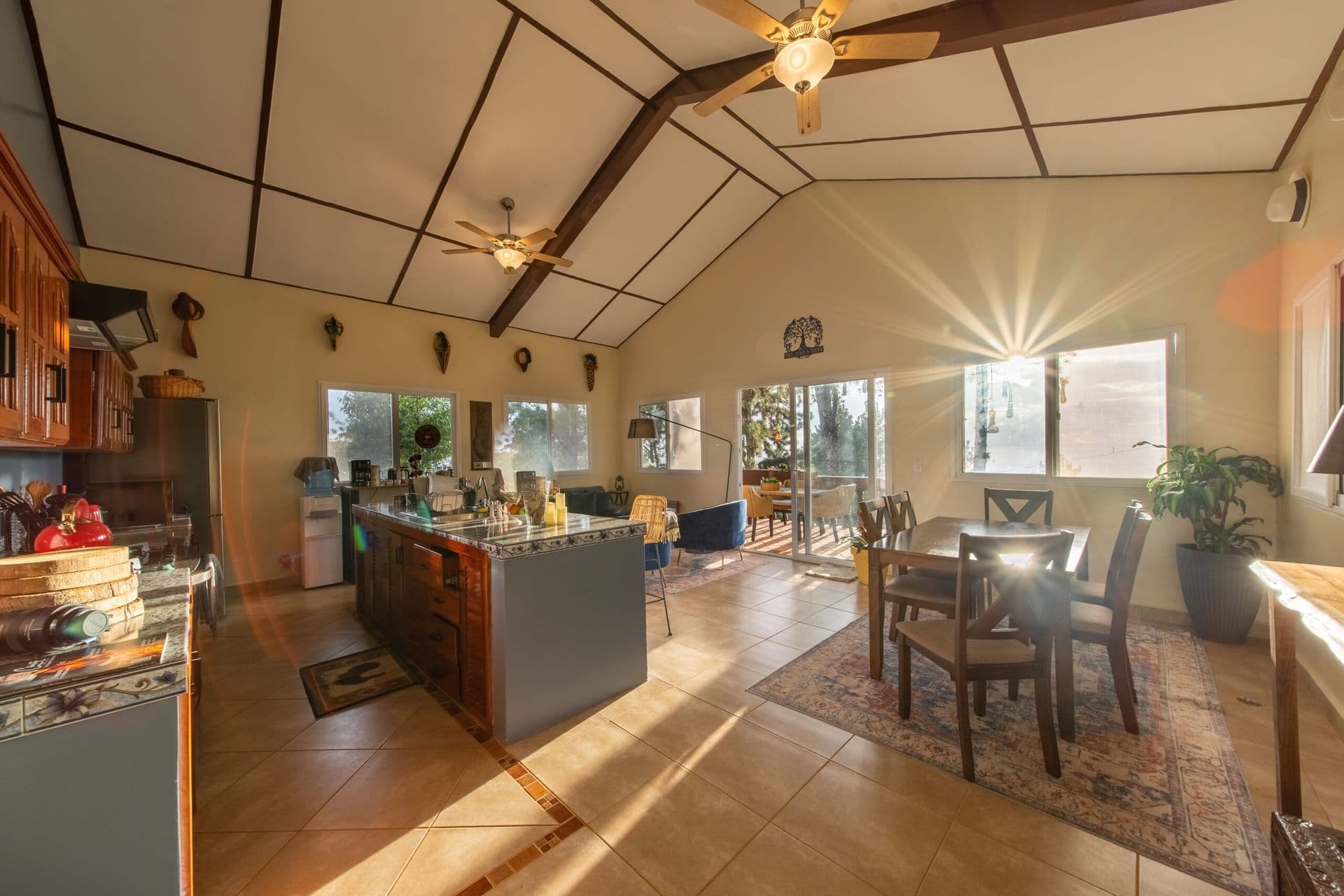
Most international flights land at Panama City's Tocumen International Airport (PTY) in the late afternoon or evening. Clear customs (usually 30 to 45 minutes), collect your bags, and either take our arranged pickup or a private transfer. The drive to Los Altos de Cerro Azul is about one hour if traffic cooperates, longer if you are leaving downtown at rush hour. The road climbs from sea level to roughly 800 meters, so by the time you arrive at 80 Norugea you will notice the air is cooler and a little thinner than the coast.
Check in, unpack, and get outside on the deck before you do anything else. The deck at dusk is one of the best casual birding spots on the property. Rufous-tailed Hummingbirds work the feeders, Bay-headed Tanagers and Silver-throated Tanagers move through the surrounding canopy, and Turkey Vultures thermal down to roost. Dinner is chef-prepared, wine and beer are on the house, and you will sleep hard. Do not push yourself on day one. Jet lag plus altitude change plus travel is enough.
Day 2: Dawn canopy trail, breakfast, waterfall hike, sunset lookout
Alarm at 5:00 AM. Coffee is waiting. You are on the canopy trail behind the lodge by 5:45, which is 15 minutes before first light. This is when Broad-billed Motmot and Rufous Motmot are most vocal, and it is also the window when mixed-species flocks form in the mid-story. Expect Golden-hooded Tanager, Green Honeycreeper, and Summer Tanager, along with woodcreepers working the trunks. Your guide will call birds by voice as much as sight in this first hour, so keep your binoculars up and let him translate.
Back at the lodge for a proper breakfast around 8:30. Rest an hour. Around 10:00 AM head out on the waterfall trail, which is a moderate 2 to 3 kilometer loop that drops into a secondary forest ravine. Trogons are common here, along with antbirds if you hit a swarm. Lunch back at the lodge.
Afternoons in the tropics are quiet for birds because the heat pushes activity down. Nap, or spend an hour on the deck with a scope. At 4:30 PM the guide takes you up to the sunset lookout. This is the reason many people come. On a clear afternoon you can see the Pacific Ocean to the south and the Caribbean Sea to the north from the same vantage point. Raptors are still thermaling here late in the day, and it is one of our best chances at Blue Cotinga, which perches on exposed high snags. Stay through sunset. Dinner when you get back.
Day 3: Full day expedition into Chagres National Park
This is the anchor day. Chagres National Park protects 129,000 hectares of primary and secondary forest that supplies most of Panama City's fresh water via the Chagres River and Lake Alajuela. It is the deep forest, and the species list changes accordingly. Pack for a long day. We leave at 5:30 AM with a packed breakfast and lunch, drive about 45 minutes to the park access, and spend the day working the trails. Depending on conditions and your fitness, this can be an easy river-edge walk or a harder ridge hike.
Realistic targets for this day include Great Tinamou (usually heard, sometimes seen crossing the trail at dawn), White-whiskered Puffbird, Slaty-tailed Trogon, several tanager species not present higher up, and if you are lucky, Crested Guan. This is also the day where a Harpy Eagle is most plausible if you have specifically booked a Harpy-focused itinerary, though see our separate post on that. Return to the lodge by 5:00 PM, tired and happy. Shower, dinner, sleep.
Day 4: Photography focus, afternoon rest, evening owling
Day four is a lighter day by design, because five days of consecutive 5:00 AM starts will break most people. Sleep until 6:00, casual breakfast, then work the lodge grounds and feeder setups with a camera. If you are on the Photography Workshop with Essdras M. Suarez ($1,100 for two days), this is when structured instruction happens. If not, our guide will still position you at the best light angles for hummingbirds, tanagers, and honeycreepers, which come in close and cooperate at the feeders.
Long lunch. Afternoon nap or read on the deck.
Around 5:30 PM, before full dark, head out for an owling walk. Cerro Azul has Mottled Owl, Spectacled Owl, and Common Pauraque on the roads and forest edges. This is a low-key hour, more listening than seeing, and it is often the walk guests remember most because the forest sounds different at night. Back for dinner by 7:30.
Day 5: Morning targets, drive back to Panama City
One more dawn. Whatever you missed on day two, this is the morning to try again. Your guide will know by now what is on your target list and which trail is most likely to deliver. Breakfast at 9:00, pack up, and be on the road by 11:00 AM at the latest if you have an afternoon flight. If you have an evening flight or an overnight in the city, you can stretch until 1:00 PM.
The drive back down to Panama City feels quicker than the way up. Tocumen airport is on the east side of the city, so no downtown transit is required unless you want lunch in Casco Viejo.
What to bring
Binoculars 8x42 minimum, a scope if you have one (we have loaners), a rain shell, quick-dry pants and long-sleeve shirts, boots with grip for wet clay, a hat, and a headlamp for the owling walk. The Angehr and Dean field guide to the birds of Panama is the standard reference. Cameras: 100 to 400mm zoom works, 600mm is ideal for the deeper Chagres work. Bring your own memory cards, plenty of them.
The lodge provides all meals, wine and beer, coffee, snacks, insect repellent, laundry service on request, Starlink WiFi, and transfers if you book them. You do not need to bring bug spray, sunscreen for hiking (we have some), or toiletries beyond the personal.
Notes on elevation and fitness
Cerro Azul is not high enough for altitude sickness, but the temperature difference from Panama City is real. Nights drop to 18 to 20 degrees Celsius, days sit around 26 to 28. Bring a light fleece. Trails at the lodge are easy to moderate. Chagres day requires basic fitness, comfortable on uneven ground for six hours with breaks. If knees or hips are a concern, tell us in advance and we will adjust the day-three plan.
Five days. Twelve to fifteen new lifers for most first-time Panama visitors. Space to breathe, decent wine at dinner, and a shot at 528 species on one small mountain. WhatsApp +507 6767-9710 or [email protected] to lock dates.